



Last month, we suggested that we may get enough rain during May to keep the gardens happy, but we’ve had to get the hose out already. The lawn is brown and there’s not much hope for a lush green this summer.
There’s an old patch of grass lawn in one of the team’s garden, under a shady tree, that has given up and turned to moss and sand.
So, by way of experiment (as is all gardening in Camber) I’m trying a natural alternative to grass. At first, we tried to encourage the moss.
The internet says…
Ideal for shady areas, moss requires minimal care, no mowing, and little watering. It thrives in compacted, acidic soils and provides a soft, carpet-like texture while improving soil fertility and supporting biodiversity.
While the moss seemed to be happy to stay where it had grown, it wasn’t keen to turn into a lawn of any size.
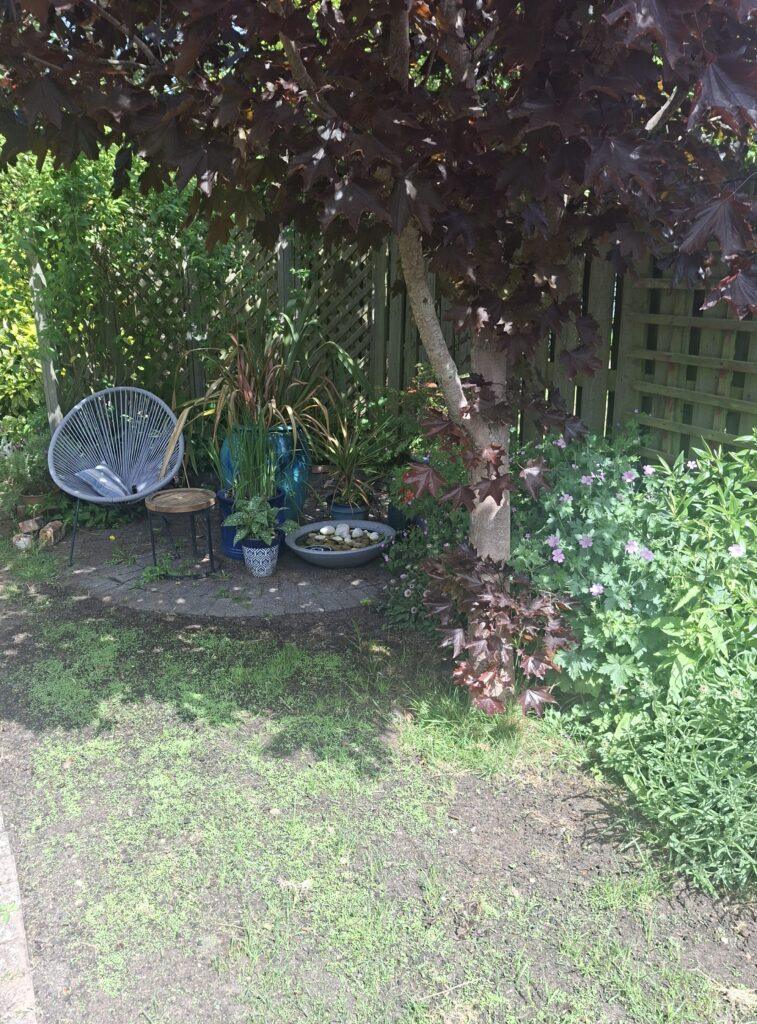
So now we’re trying White Clover: a drought-tolerant, low-growing plant that enriches soil with nitrogen, clover creates a lush green appearance without frequent mowing. Good for insects, especially bees.
We’ve taken off the top inch of growth, replaced with some clean topsoil and sprinkled liberally with clover seeds. So far, the grass is coming back very healthily! We wait to see how the clover competes.
If all else fails, we shall have to invest in more expensive alternatives.
Camomile: Forms a low mat with fragrant leaves, suitable for semi-shaded areas, and can be mown occasionally to encourage thicker growth. Or Native violets, Pratia, Scleranthus, Convolvulus, Pigface, and some Grevilleas:
These plants provide attractive ground cover, are drought-tolerant, and support local wildlife. While all of these would look beautiful, they are grown from pug plants and will take years to form a mat or lawn.
Watch this space!