





By Jane Whitaker
During the wonderful sunny spell we enjoyed in mid-March, the forsythia shrub in my garden came into full bloom, cheering everything up with its vibrant yellow flowers. It was a wonderful sight.
However, before taking some clippings to add to my vase of flowers indoors, I recalled my grandmother telling me off for doing just that, back in the 1990s. She was aghast when she saw I had a vase of the beautiful blooms on my kitchen table. She said that I should take them outside immediately as they bring bad luck! I decided to look into this superstition, before I cut any stems to add to my vase.
It seems the negative superstitions surrounding this beautiful bloom centre in UK folklore. Around the world, in different cultures, it is seen as a good omen, whether indoors or out.
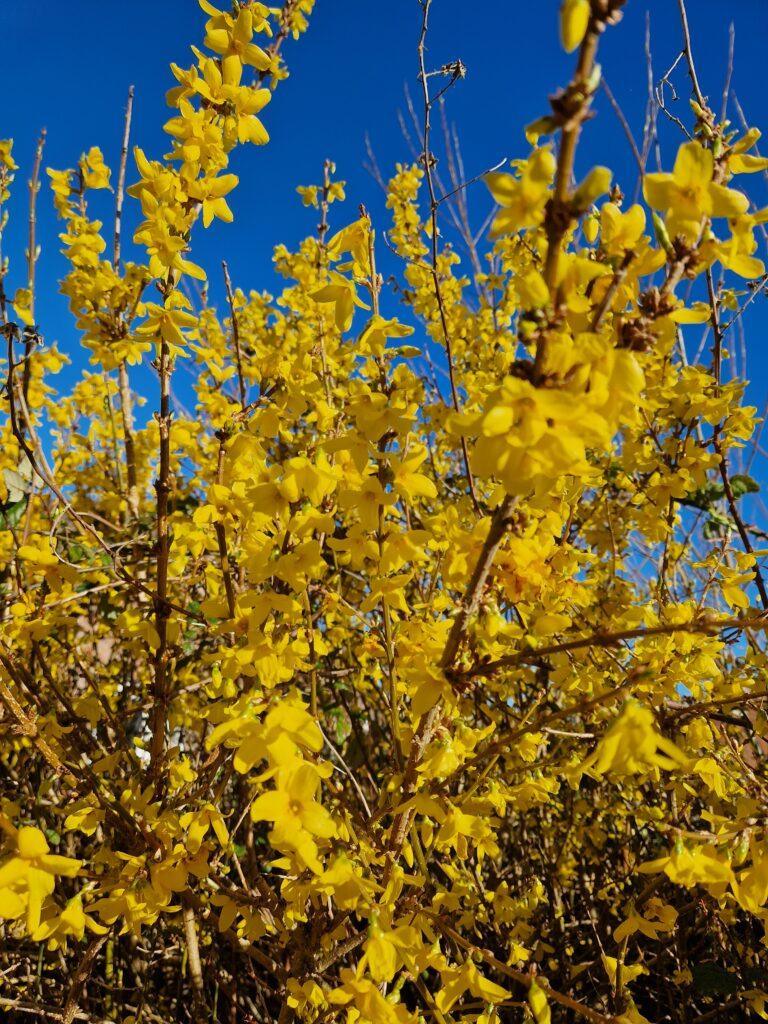
Forsythia is a welcome sight, recognized as a herald of spring, blooming early, from February to April, signalling the end of winter, and promising joy, positive energy, cheerfulness and brighter times ahead. Its ability to bloom in harsh conditions and thrive early indicates resilience and endurance, and its golden colour is associated with wealth and abundance.
However, in the UK – and especially in rural areas and farming communities – forsythia has a different edge. Whilst it is commonly believed that forsythia is all of the above good things whilst it is in the garden, once it is cut and brought indoors, everything changes.
In some parts of the country – and presumably the part where my grandmother grew up – it is thought that bringing forsythia into the home simply brought bad luck and misfortune. The same was said of many other flowers (remember our article on bringing white lilies indoors in last April’s edition). However, it would appear that forsythia is not widely thought of as an ominous presence in the home, but more a case of tempting bad weather.
In farming communities, it was believed that forsythia, being one of the first shrubs to flower, acted as a “weather-watcher” shrub, indicating the timing and prosperity of spring.
Farmers warned of not putting away your blankets yet because the blooming of forsythia meant it was only just early spring and there were still cold snaps and light snowfalls to be expected, and winter is not entirely finished.
This gave rise to the common UK superstition that if you brought forsythia indoors, there would be three more snowfalls before winter truly ended.
I wondered why the poor forsythia got this bad reputation. Looking around my garden, I could see plenty of other bright, cheerful, yellow blooms that had made it through – daffodils, primroses, tulips, crocus, polyanthus and kerria japonica – but none of those seem to be thought of as harbingers of harsh weather.
I decided to cut a few sprigs to add to my vase of spring flowers on my kitchen table so, if it snows three more times in Camber before summer is here, I guess you can blame me!