


Big Wins From Little Bins
By sending your used metal cans, glass bottles and cardboard boxes for recycling, these materials can be turned into valuable new items and kept out of landfill, helping to protect our environment. For many households in the United Kingdom, recycling these kinds of items has become an automatic part of our everyday lives.
But did you know that food waste can also be recycled in the same way, as well as being turned into compost?
Fruit and veg peelings on your chopping board, leftover chicken bones from dinner, or the empty shells left from your morning eggs – all of these inedible scraps might seem useless, but they can be transformed to make something endlessly useful.
Through a process called anaerobic digestion, food waste can be broken down to make biogas. This is used to make electricity or upgraded to create green gas that can heat our homes. The same food scraps that would have otherwise gone into our rubbish bins can get transformed into a source of clean, renewable energy.
foodwasteguide26
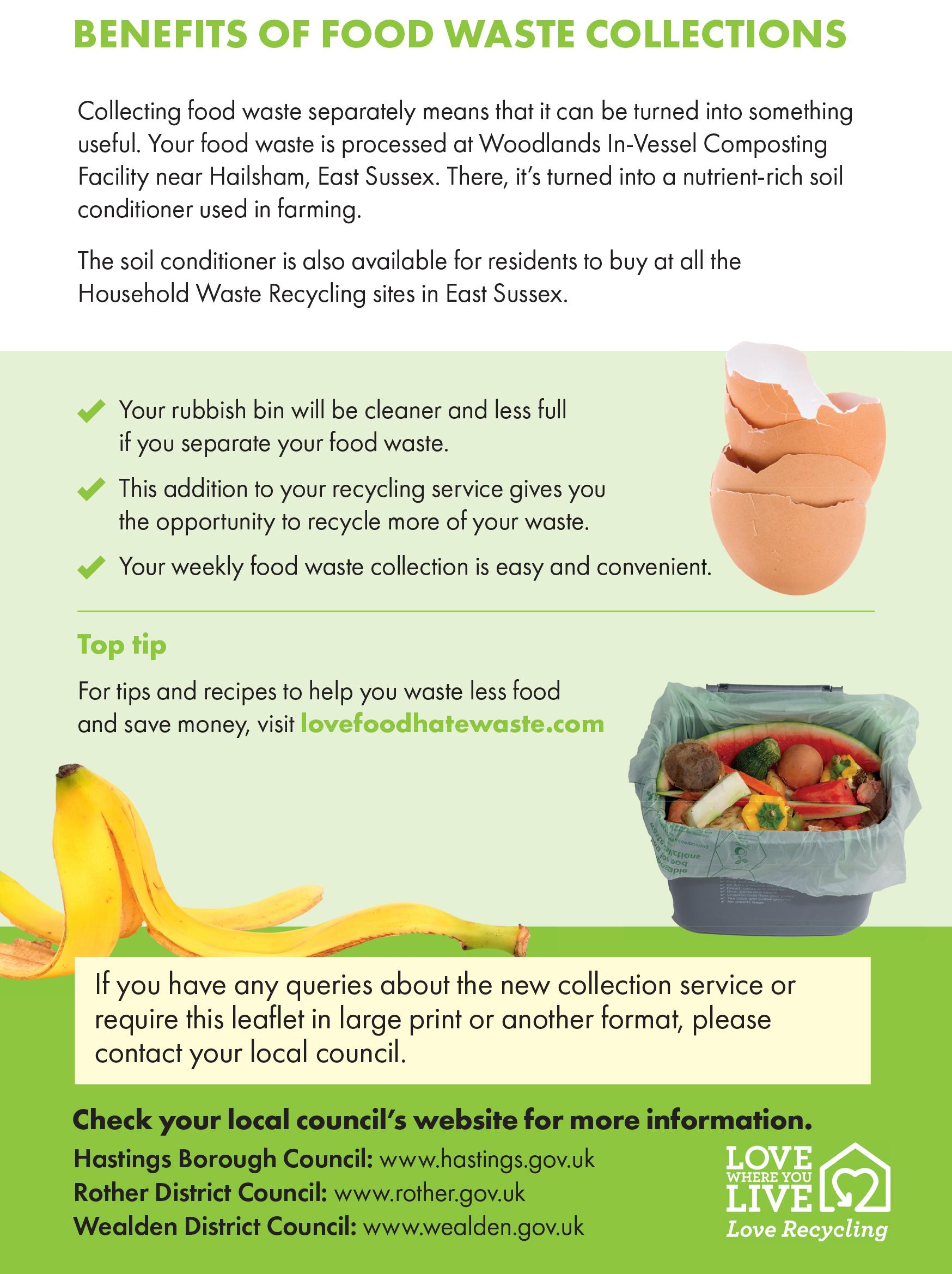
And that’s not all. This process also produces something called digestate, which can be spread on crops as a bio-fertiliser. These crops grow to become the food that ends up on our plates. It’s a circular process which helps the farmers who produce what we eat.
The wins don’t end there. Food waste recycling also helps the environment in a big way. By recycling our food waste we reduce the amount going to landfill, where it produces harmful greenhouse gases. These escape into the atmosphere and contribute to climate change.
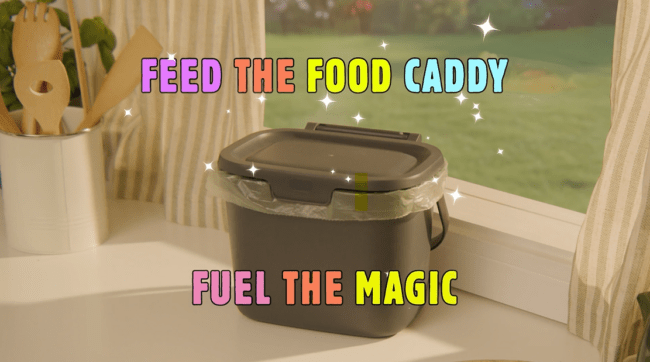
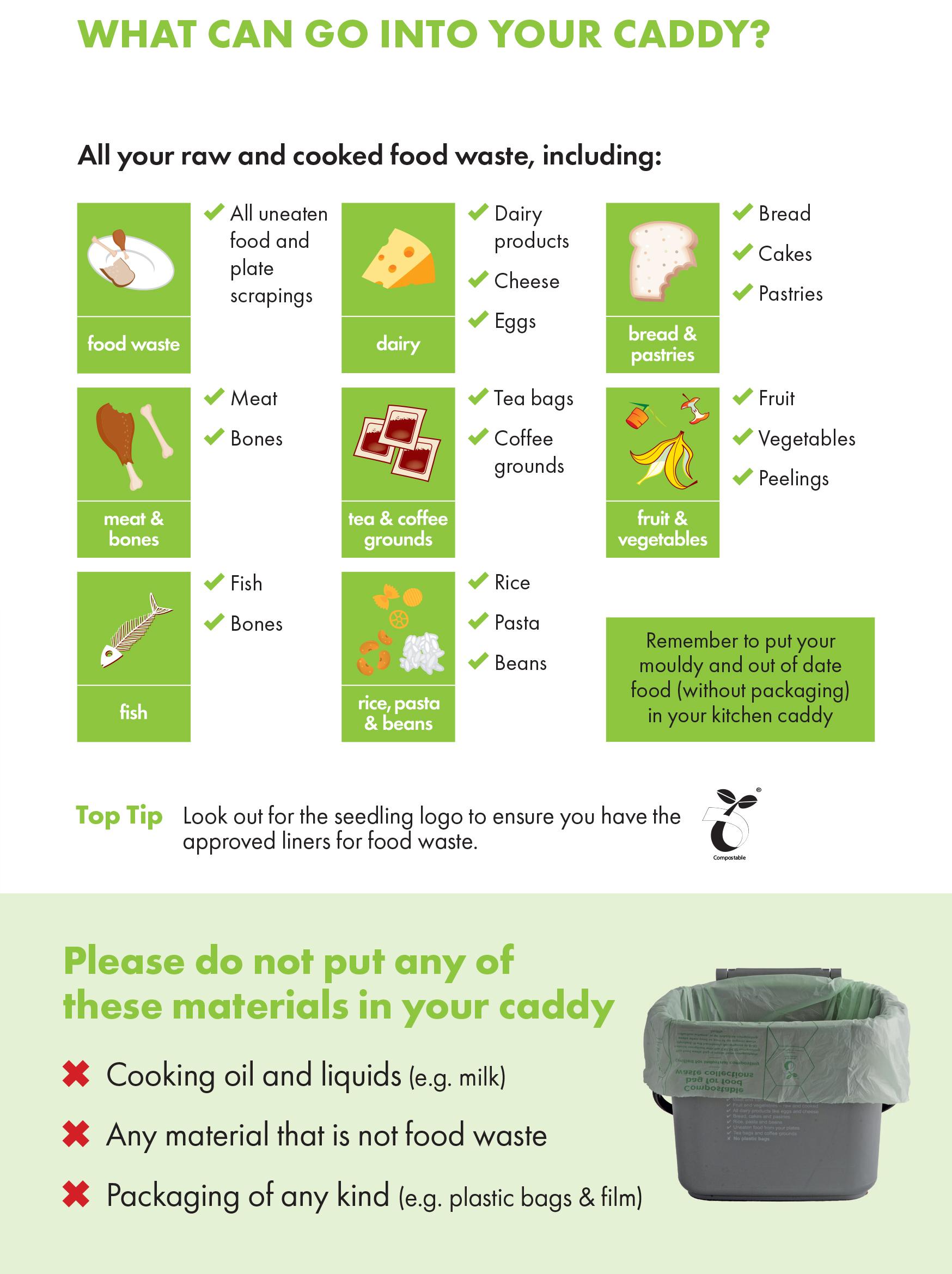
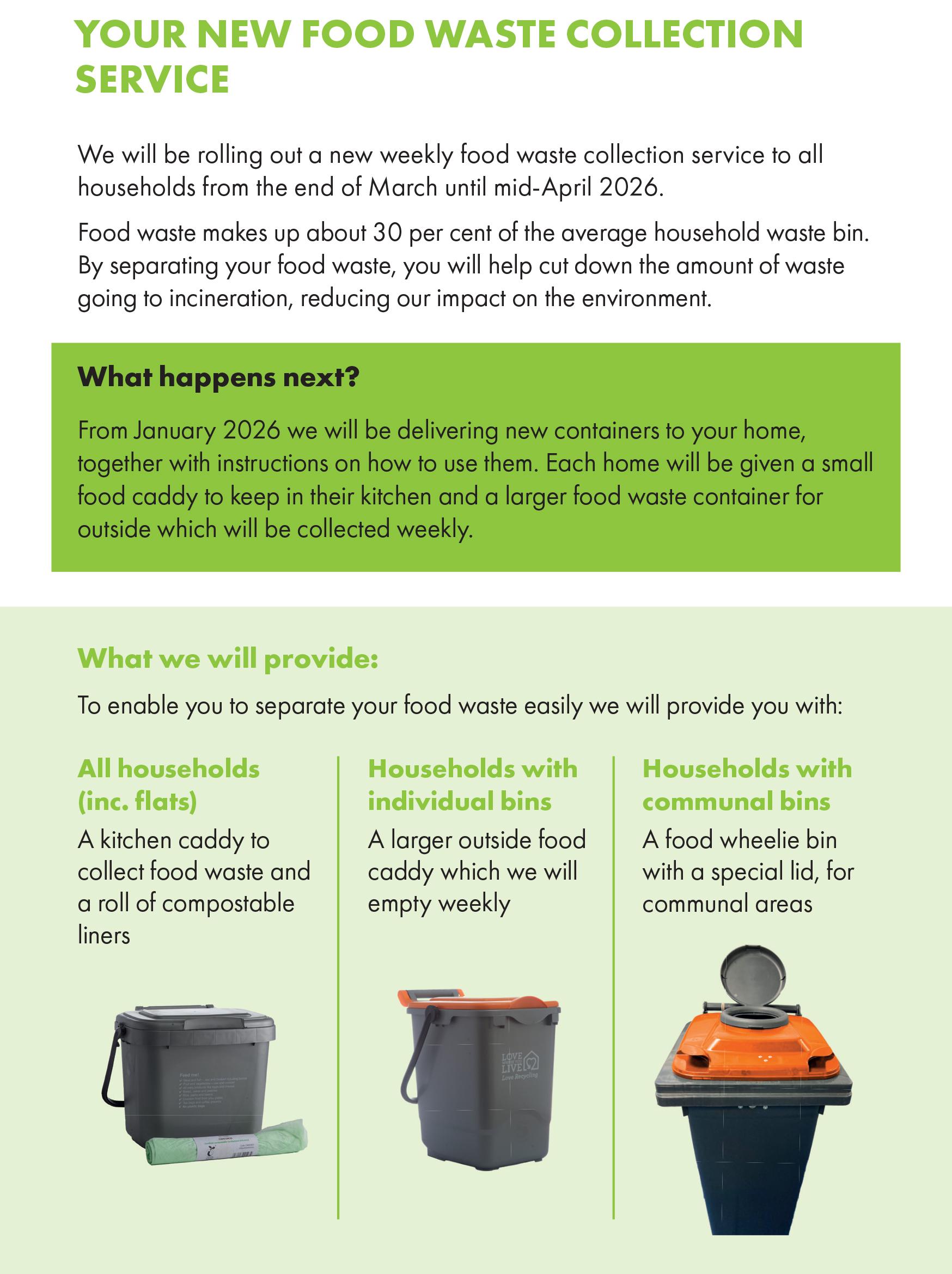
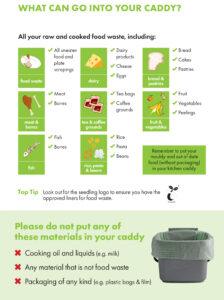
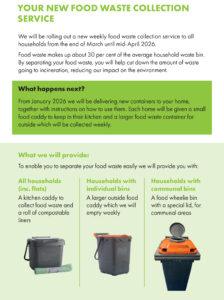
In fact, according to the Climate & Clean Air Coalition, around a fifth of global methane emissions come from organic material like food waste in landfill sites. Each time we recycle our food waste we help to tackle this problem. All of this good stuff is possible with the help of a kitchen caddy. It’s a nifty little bin for organic kitchen waste only. From coffee grounds to banana peel and expired meats, it can all go in the caddy as long as the packaging is removed. This is then collected by your local authority, alongside your usual waste collections.
Best kept near where you prepare food, caddies are easy to use, lock in any odours and are mess-free.
The humble kitchen caddy is small but mighty. According to WRAP, a global environmental action NGO, a single caddy full of food waste can generate enough electricity to power an LED light bulb for more than 24 hours, boil your kettle three times, or fully charge a tablet device up to five times!
How to get involved
From April 2026, local authorities in England will be required to collect food waste, as part of new changes to recycling services.
This means you can recycle the same things wherever you live. Rother District Council will roll out the service late March / early April.
Food waste containers will start to be delivered in early January and will take several weeks to deliver to all households across Rother, so please be patient.
Information regarding your food waste collection day will be confirmed by letter prior to the commencement of collections.