

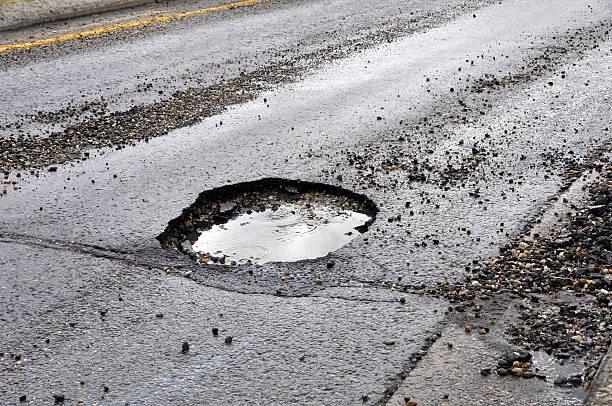
There was much interest in February when, for a few moments, the locals thought that the pot holes on the Camber road may be fixed. Alas no, the council, in its wisdom, arranged for traffic lights and contractors to fill one hole and leave the rest. Comments on social media were suitably frustrated.
To be fair, the council can only fix a pot hole if it knows about it, so please make sure that you report it. For the sake of research, our team have reported the large holes across the road between the Money Penny Farm turning and before the corner.
For the record, the spot is named mega-incoming-changing on “What 3 Words”. There were no other reports on the various sites. Disappointingly, they have since advised us that problem is fixed – but it isn’t, so please continue to report it.
You can report problems on various internet sites – Rother DC, FixMyStreet and at gov.uk. If the hole is bigger than 30cm it is a priority, although we don’t recommend getting out of the car to measure and take photos at that spot!
As this space in the newsletter is reserved for environmental issues, we wondered what are the environmental benefits of tarmacadam roads?
According to the surfacing company Allmac, one of the most compelling advantages of tarmacadam roads is their positive impact on the environment.
Unlike traditional road surfaces that may contribute to soil erosion and water runoff issues, tarmacadam is designed to manage stormwater effectively. The porous nature of certain tarmac surfaces allows rainwater to permeate through the material, reducing the risk of flooding and promoting groundwater recharge.
This feature is particularly beneficial in urban areas where impervious surfaces dominate, leading to increased runoff and potential water quality issues. By utilizing tarmacadam roads, you are supporting a more sustainable approach to urban planning that prioritizes environmental health. Moreover, the materials used in tarmacadam construction can be sourced sustainably, further enhancing its eco-friendliness.
Many modern tarmacadam mixtures incorporate recycled materials, such as reclaimed asphalt pavement (RAP), which reduces the demand for new raw materials and minimizes waste. This recycling process not only conserves natural resources but also lowers greenhouse gas emissions associated with the production of new asphalt.
As you consider the environmental implications of road construction, it becomes clear that tarmacadam roads represent a forward-thinking solution that aligns with global efforts to combat climate change and promote sustainable development.
So there you have it: can’t live with it and can’t live without it.